Ten tips for editing multi-author collections
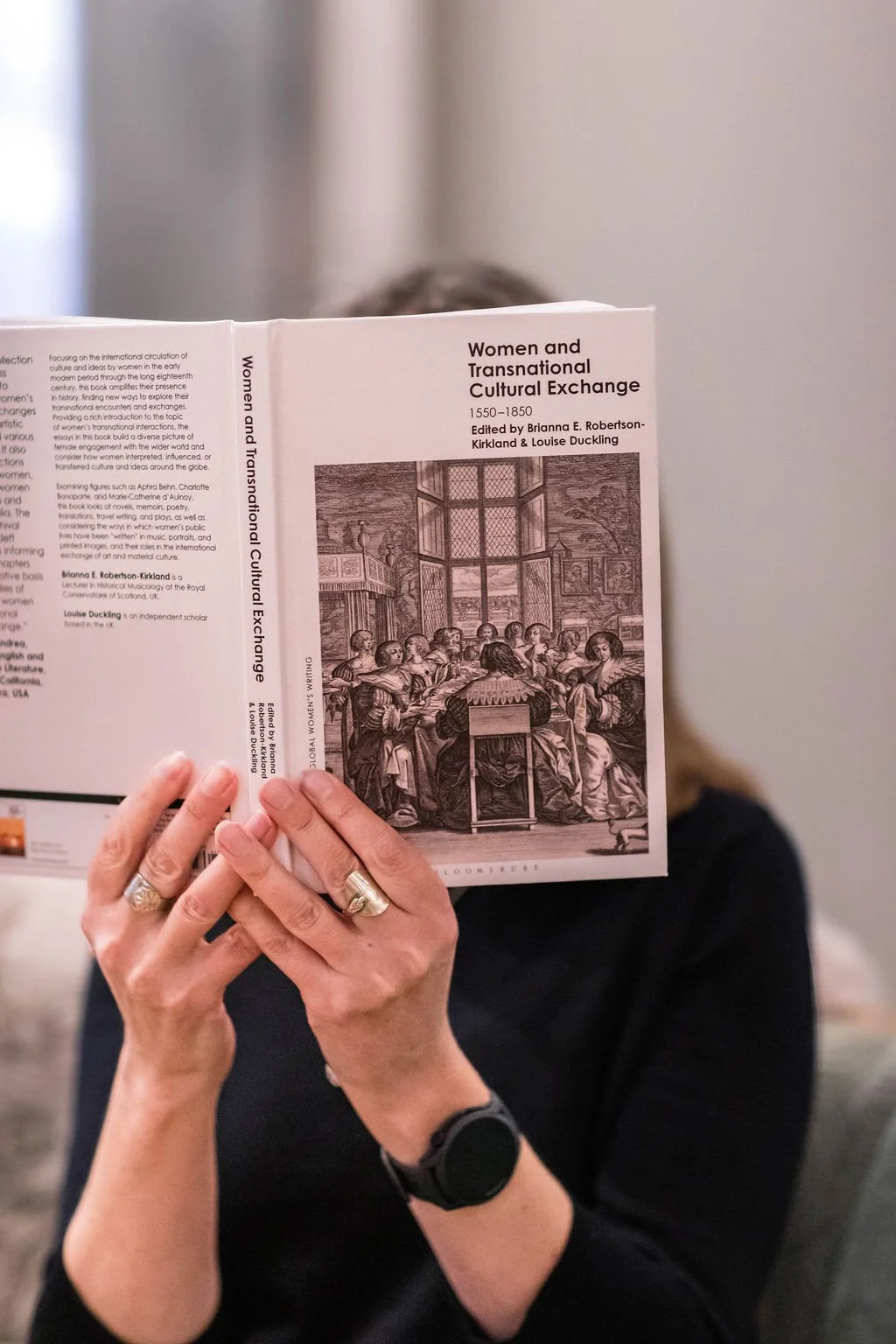
In February 2026, my latest book Women and Transnational Cultural Exchange, 1550–1850 was published by Bloomsbury Academic. Co-edited with Brianna Robertson-Kirkland, this multi-author collection was five years in the making and features 17 authors. In this post, I will share ten tips on how to manage the process of creative collaboration involved with such a complex project.
These tips are based not only on my experience as an academic, but also on my professional experience as an editor. I have supported other academics with their collections, and worked individually with authors to refine their chapters. In the latter case, these contributing authors have sometimes had stressful (or less than smooth) experiences. These issues could have been avoided, or at least minimised, with better planning and communication.
1. Begin with clarity
From the outset, be clear about your idea and your target audience. What is the key contribution that you are seeking to make in the field? Will the collection serve a broad or specialist audience? Will it be a multidisciplinary or disciplinary collection? Bear in mind that multidisciplinary collections can be more challenging to pitch and sell to a publisher (due to their limited audience).
2. Research publishers
The answers to the questions in point 1 will help determine your route to publication. Pick a publisher with a track record in your field or find one that is currently building a relevant catalogue or book series. In most cases, you will need to send completed sample chapters with your book proposal. As a result, while you can make informal pitches at this stage, the formal proposal will take longer to prepare.
A potentially faster option is to prepare a special issue for a target journal; in this case, you can pitch your idea straight away to the journal editor.
Before you commit to either route, be realistic about the time and the effort involved in the process, and be clear about your goals. Will the publisher reach your target audience? Will they offer your preferred book formats (e.g. paperback, eBook)? Can they offer open access or an accessible price point? What about the appearance and quality of their publications? Does the production phase include copyediting?
3. Design and circulate a call for papers (CFP)
It helps to design your call for papers with a publisher in mind, so ideally do your research first. The CFP should give prospective contributors quality information and clear instructions. Outline the key proposition or argument, and specify any other requirements:
The approach to be used (e.g. theoretical, historiographical).
The type or types of contribution required (e.g. case study, narrative, interview).
Any specifics, if known (e.g. referencing style, illustrations).
Scope (e.g. time period, geography) and extent (i.e. word count).
Timeline with key dates (e.g. deadlines for initial proposal, final submission, revisions).
4. Build a cohesive collection
When reviewing submissions, ask your potential contributors for revisions or clarifications if necessary. You can then reject anything that is still outside your scope or does not fit well within the emerging collection. You are ultimately looking for a unifying structure. Does the overall argument run like a thread through all the selected proposals? Bear in mind that there is a limited market for edited collections, so you need to make sure your book serves a clear and coherent purpose.
5. Craft an engaging book proposal
Before submission, ask for critical feedback on your book proposal from friends and colleagues. An informal peer review at this stage can be invaluable. Have you demonstrated why the world needs this collection? You need to explain in objective and neutral terms why the book is original and why it matters.
When submitting a proposal, make sure you follow the publisher’s requirements, in exactly the order requested. Send your most polished chapters and be realistic about your proposed timescales. You can usually submit to more than one press at this stage (but do check the submission guidelines of all target publishers). Note, however, that the publisher will request exclusivity before proceeding to peer review, as this involves a commitment in time and money.
Following peer review, be prepared to refine and revise your proposal. Adjustments will likely be required before a contract is offered, but the commissioning editor will take your responses into account. Make concessions where necessary. Stand your ground where necessary.
6. Manage the project with care
Editing a collection is hard and can take a long time, so be organised!
Set up an Excel spreadsheet or project workbook and monitor the progress of all the chapters regularly. For Women and Transnational Exchange, we used a shared spreadsheet that monitored the status of each contribution. We tracked the agreed submission deadlines, documents received, word count and any revisions in progress.
Consider preparing a sample chapter formatted to the publisher’s style. This may save time and effort, as contributors can often find publisher style guides opaque and confusing. Providing a sample chapter for authors to follow may ease the formatting process.
Be prepared for the unexpected. There will always be delays with some contributors, so build time buffers into your deadlines. Be prepared for withdrawals (voluntary or otherwise).
7. Communicate well and often
Keep communicating with your contributors and your commissioning editor throughout the course of the project. Communications should be clear, regular, kind and considerate.
Organising an online workshop with your contributors can be extremely helpful, especially during the early phase of the project. For Women and Transnational Exchange, we invited everyone to give a brief 5-minute presentation on their chapter. Sharing ideas in this way can help to strengthen thematic cohesion within a collected volume. A workshop can also forge a connection among your authors and a sense of being invested in the project.
8. Co-ordinate effective peer review
The publisher’s own peer review will probably be based on a small sample of the book (at proposal stage) and may not be sufficient for complex studies. For example, in the case of multidisciplinary collections, the publisher will have selected peer reviewers with relevant knowledge, but they are unlikely to be specialists in all areas covered in the volume.
It is therefore advisable, before submission of the final manuscript, to carry out your own peer review of each chapter. In a disciplinary collection, you may be qualified to carry out this task yourself. For a multidisciplinary collection, use your network to obtain quality reviews.
Help your authors filter and synthesise the peer review responses. Provide comprehensive feedback from the outset, with the aim of minimising the number of revision rounds. You may also need to be clear about word count at this stage. It is common for authors to add any details requested at this stage as extra text, rather than removing or revising material. This can create issues with the size of the volume if not properly managed, and for economic reasons you must keep within your contractual word limit.
9. Keep on top of the production processes
When the whole manuscript is submitted to the publisher, the book may be sent for a ‘clearance read’. Be prepared to make any final revisions requested (usually minor changes at this stage). The text will now go through a production process involving copyedits (queries and corrections), typesetting, proofreading and indexing. All publishers have different processes and timelines. Check with your production editor so that you know exactly what will happen and when.
Everything now tends to happen very quickly, with sharp turnaround times expected for copyedits and proofs, As academic editors, we are usually given one or two weeks to confirm any changes at each stage. Mitigate against any overload or unreasonable demands on your authors by giving them clear notice and advance instructions. It is not fair to ask authors to turn around queries in one or two days (something that happens far too often).
Wherever possible, can you complete minor copyediting tasks yourself? For example, you can almost certainly deal with queries relating to style (capitalisation, use of italics, archaic language, etc.). If you are a ‘hands on’ editor, always make sure that authors are involved in (or aware of) any content editing and receive a proof copy of their chapter to check and approve in good time.
Some academic editors ask contributors to provide chapter keywords to help with the indexing of the book. I understand why this may feel like a good idea for an overwhelmed editor, but it places a greater burden on the author. In terms of quality, this process will inevitably result in an uneven index – unless the resulting keywords are heavily edited.
10. Maximise publicity and promotion
You are over the finish line, and your book is in print! But the work does not end here, as your publisher may expect you to participate in promotional activities. One key benefit of multi-author collections is that every contributor can be an advocate for the book. Ask your authors to promote the collection via their individual networks and social media. Perhaps you can also organise a launch event? Whichever way you choose to promote the book, be sure to pause and reflect on your shared achievement – and celebrate!
***
Women and Transnational Cultural Exchange is my third edited collection. With each volume I have learned something new – especially on how to sustain this kind of collaborative effort over a long period of time. In summary, from an editorial perspective, it is necessary to have excellent communications and systems in place. And for an effective outcome, it really helps to be kind and considerate to your authors. If you would like any support with a multi-author collection – as an editor or contributor – please get in touch.
Publication date: 9 March 2026