
The art of the book review
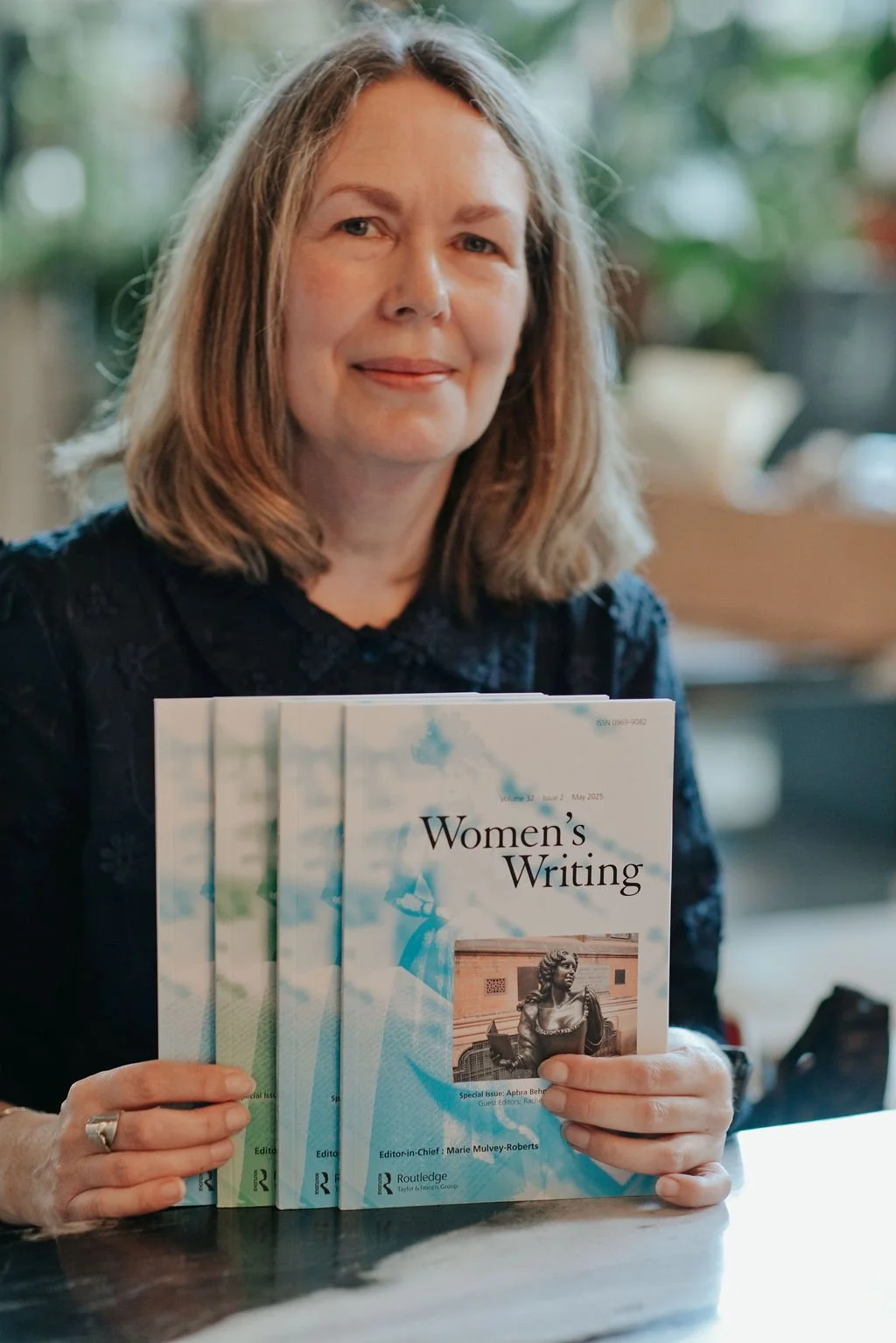
I became Reviews Editor for Women’s Writing in 2020. It’s been fascinating to see how different authors approach the review process.
Thoughts from an academic Reviews Editor
How do you capture the essence of a book in under 1,000 words? Book reviews may be short, but they are deceptively difficult to write. In the words of Harvard professor Helen Vendler, reviewing is a task that ‘requires us to describe an object that is invisible, to recreate it for someone who has never seen it’. It is a process that requires knowledge, deftness, critical thinking, time and reflection. It can also be hugely rewarding.
In this post, I’ll share some thoughts on the art of the review based on my experience as Reviews Editor for the international journal Women’s Writing. I focus on how to craft non-fiction reviews, with an emphasis on academic principles, but many of these points are universal and can be applied in other contexts.
Being commissioned to write a review
If you’re a known expert in your field, then a Reviews Editor may invite you to write a review. But what if you’re at an earlier stage in your writing or research career – how can you get a review published? Or perhaps you’ve written a book, and you’d like it to be considered for review?
In either case, you can make a pitch to a Reviews Editor. Most academic journals publish their editors’ contact details on their websites. We’re easy to find and we appreciate hearing from you. But please bear in mind:
Reviews can be time-consuming. Make sure you have the time and it is the best use of your time. If you have other big writing or research projects on the horizon, is it sensible to make this commitment?
Reviews in academia are generally unpaid. I always try to secure physical copies of books for reviewers (as a small but tangible benefit), but some publishers may only provide digital copies.
It’s always helpful to pitch a specific idea, so think about a book that is relevant to the publication and its readers. We receive a lot of offers that are outside the scope of the journal, and this wastes everyone’s time.
What are your credentials for taking on the review? You need to know enough about the subject of the book to be able to assess it critically.
If these criteria work for you, then reviews can offer a great start to your writing and publishing career. I like to think of it as a ‘soft entry’ to publication: it’s a faster and simpler experience and you’ll be guided by the Reviews Editor.
Reading the book as a reviewer
This may sound obvious, but you need to read the whole book: this means also paying attention to any images and their captions, as well as the front and end matter (the preface, the notes, the bibliography, the index).
Make outline notes as you read, so that when you finish the book you have relevant material at hand. What is deemed relevant here will depend on the other readers in this process. First, think about the target audience for the book and how (or whether) the author has met their needs. Second, think about the readers of your review: what do they need to know? Are they likely to be experts in the field, or are they general readers who will expect you to provide more context?
There are two useful exercises you could consider as you read the book:
Write a short synopsis of each chapter straight after reading it (preferably using one or two sentences).
Highlight memorable quotes that capture the essence of the book (these can be good or bad points).
These concise notes can be really useful in deciding the structure, style and tone of your review.
Where to begin your review
There is no set formula for a great book review. This is a creative process and the review itself can be shaped in many different ways. However, reviewers should bear in mind the publisher’s guidelines. These will likely be very different in an academic journal compared to a personal blog or Substack page.
Some academic journals can be quite precise in terms of specifying structural elements and even set rules about what to include in first sentences. You may be required to discuss all chapters, all contributors (in a collected volume of essays), and the theoretical premise(s) and approach(es) in the book. Other publications may have limited or no content requirements. All are likely to have guidelines on house style or word count.
Despite any guiding framework that may be in place, the reviewer usually has considerable freedom in terms of their intellectual and creative approach. Some of the most interesting reviews often tell a story. Indeed, it may be useful to think of the story arc of the book itself: how does it progress from introduction to conclusion? Similarly, is there a particular passage, case study or image in the book that serves to illustrate its overall goal? Are there any key quotations that could open or close the review? Introductions and conclusions are often enhanced by using the author’s own words. All these elements can help you shape your own thoughts and decide where to begin.
Describing the book
A review should describe the component parts of the book and serve as an introduction to the work as a whole. Your first draft may well be too long for the allocated space, so try to focus on the central points and highlights. You do not want to load the reader with excessive amounts of detail. Economy is essential.
One descriptive option is to provide a concise chapter-by-chapter synopsis of the book. Alternatively, you can explain the big picture and then give your readers one or two illustrative case studies.
Whichever approach you take, your readers will need to know what type of book it is, the author’s overall aims and objectives, and some introductory information about the subject being addressed. If the book is about a particular author, for example, try to include a brief biography early in your review.
In creative non-fiction, as with fiction reviews, consider how much the reader really must know. If there are big reveals in the text, should you give away any spoilers? When describing any portion of the book, it is also important to be accurate: check that you’re citing the book’s quotations and facts correctly.
Evaluating the book
This is where you can provide your perspective – and it’s great to give an opinion – but your evaluation should consider what the author was intending to do. Do not criticise a book because it is not how you would choose to write it. Similarly, one weakness in a text should not dominate a review; the aim should be to give a balanced picture.
Think instead about what the book is claiming to do and ask yourself: does it meet its objectives? What did you expect to learn, and did the book meet these expectations? What did you find, what worked and what fell short? What are your thoughts on the author’s writing style? In terms of the book’s central ideas, perhaps some areas were overwritten and dense, while other areas were undeveloped or lacked precision.
A good evaluation will also situate the book within its contexts – its time, place and ideological space. How does the book engage with other work in the field? Does the book sit within the usual paradigm, or does it propose an entirely new way of thinking about the subject? Does it open avenues for new research, and for future books?
Think again about the book’s target readers. Who is it helpful for, and who might enjoy it? What are the elements that might appeal to other readers – even if they didn’t appeal to you?
A review may also consider elements relating to book production, such as the use and number of images, as well as reproduction quality and overall design, but please remember that these areas were almost certainly outside the author’s control.
A good reviewer will offer an objective and constructive assessment. You should provide evidence of great writing, of great research, of new insights; conversely, if you find faults in the work then be clear about the frameworks, standards and measures that you are applying in your assessment. Comparisons with similar books can be helpful to provide benchmark analysis.
Ethics
There are a number of ethical considerations to consider. First and foremost, there really is no need to be derisively negative about a book. Remember that the author is human and they will have put a great deal of thought, craft, emotion and time into the book. Ask yourself if your analysis is truly objective and if the world really needs your bad review. In some cases, it may be worth passing the review opportunity to someone else.
Second, it is wrong to assume that every review must contain at least one negative comment. If you genuinely enjoyed the book, and can’t think of any obvious flaws, then please don’t hunt for a negative point just for the sake of it.
Third, I believe it is perfectly acceptable for colleagues to review each other’s work. In specialist fields of study, it is often likely that authors and reviewers will know each other; the important thing is to be an impartial reviewer and, within the framework of the review, embark on an intellectual conversation with the book and the reader that will contribute to scholarly exchange.
Finally, reviewers need a degree of tacit or explicit knowledge to write a helpful review. Declare any limitations in your understanding, and don’t review anything that you feel is too far outside your area of competence.
***
In my capacity as a Reviews Editor, I have commissioned many excellent reviews by generous individuals whose aim is to support their colleagues and advance knowledge in their discipline. Reviewing is a creative process that serves the author and the readers of the book. Yet at the same time it can also serve the reviewer, helping them to develop their own critical reading and writing skills. I hope you’ll feel inspired to give it a try.
***
Please get in touch if you’re interested in reviewing a book for Women’s Writing. If you need support, I also provide professional editing or proofreading services for book reviewers.
Publication date: 20 May 2026